Livestock & Open Range Accidents · Published August 2026 · Reviewed by Mathews Metyko, State Bar No. 24096574 · 8 min read
Hit livestock on a Texas road, or received a claim letter as a rancher, livestock owner, or sale barn after an animal got loose? These cases turn on county-specific stock law status and road classification, not just who was driving. Here is how Texas law actually treats them.
Quick Answer
- Texas is an open range state by default — a livestock owner generally has no duty to fence animals in, and the Texas Supreme Court confirmed in Gibbs v. Jackson (1999) that there is no common-law duty to keep livestock off a farm-to-market road.
- Texas Agriculture Code § 143.102 creates an exception: livestock may not knowingly be permitted to roam unattended on the right-of-way of a U.S. or state highway — but this does not extend to farm-to-market roads.
- Many counties (and sometimes individual precincts) have adopted local stock laws under Agriculture Code Chapter 143 that require fencing — whether an area is open or closed range must be checked county by county.
- A driver who strikes livestock on a highway is generally not liable to the owner for damage to the animal absent gross negligence or willful intent (Ag. Code § 143.103) — a protection that runs the other direction, toward the motorist.
- Civ. Prac. & Rem. Code Chapter 87 limits liability for sale barns, livestock shows, and farm animal professionals for injuries from the inherent risks of a farm animal activity — but that limitation has exceptions.
- The statute of limitations for most Texas personal injury claims, including livestock collisions, is two years from the date of the accident (Civ. Prac. & Rem. Code § 16.003).
Why Hire a Livestock Accident Lawyer Instead of a General Injury Attorney?
A general personal injury or general defense attorney will treat a livestock collision like an ordinary car accident — and that's the wrong starting point. These cases turn on questions most attorneys never encounter: whether a specific road is open range or closed range in that county, whether a fence meets the legal definition of "sufficient" under Agriculture Code Chapter 143, and how the inherent-risk liability limits in Civil Practice and Remedies Code Chapter 87 apply to a sale barn or livestock show. A livestock accident lawyer who knows this framework — and who has hands-on familiarity with how livestock are actually handled, transported, and shown — can spot the facts that decide these cases before they disappear.
Representation on Both Sides — With a Conflicts Screen
The Metyko Law Firm defends ranchers, livestock owners, and sale barns against roadway collision and liability claims, and separately represents injured motorists and their families pursuing claims when a negligent livestock owner's conduct caused a crash. On the plaintiff's side, the firm has represented a motorist whose vehicle was struck by a bull that had escaped its containment — a case that illustrates how quickly a fence or gate failure can turn into a serious roadway hazard, and how much the outcome can depend on nailing down the county's stock-law status and the condition of the enclosure before that evidence disappears. Every new matter is screened for conflicts of interest before the firm agrees to representation, and the firm does not represent opposing parties in the same incident. If you are unsure whether representation is available for your specific situation, ask during your free consultation.
Is a Rancher Liable When Their Cattle Cause a Car Accident in Texas?
It depends entirely on where the collision happened. Texas is an open range state by default, meaning livestock owners are not required to fence their animals in, and a motorist generally cannot recover damages just because an animal wandered onto the road. In Gibbs v. Jackson, 990 S.W.2d 745 (Tex. 1999), the Texas Supreme Court declined to impose a common-law duty on a horse owner to keep the animal off a farm-to-market road — and that remains the controlling rule for most rural Texas roads today.
There are two major exceptions. First, Texas Agriculture Code Section 143.102 makes it unlawful to knowingly permit livestock to roam unattended on the right-of-way of a U.S. or state highway — but Section 143.101 defines "highway" narrowly to exclude farm-to-market roads, so this exception often does not reach the rural roads where these accidents actually happen. Second, a substantial number of Texas counties have adopted local stock laws under Agriculture Code Chapter 143, which require certain livestock to be fenced within all or part of the county. Whether a given road sits in open range or a stock-law area — and which animals the local election covered — has to be checked county by county, and sometimes precinct by precinct.
There is also a lesser-known protection that cuts the other way, for the motorist. Agriculture Code Section 143.103 provides that a person who strikes livestock on a highway is not liable to the animal's owner for damage to the animal unless the collision involved gross negligence in the operation of the vehicle or willful intent to strike, kill, injure, or damage the animal. In other words, an ordinary, non-negligent driver who hits an animal on the road generally doesn't owe the rancher anything for the animal itself — a fact that surprises people on both sides of these cases.
Open Range vs. Closed Range: Why the County Matters
Open range and closed range are not statewide categories — they are local determinations, and Atascosa, Kendall, and the other rural counties across South and Central Texas ranch country do not all follow the same rule. A stock law election can apply to all livestock or only specific species, and can cover an entire county or just a precinct within it. Before either side in a livestock collision case can evaluate liability, the first question has to be answered: is this road, in this county, open range or closed range — and does a fence at this location meet the legal definition of "sufficient" under Chapter 143?
| Factor | Open Range | Closed Range (Stock Law) |
|---|---|---|
| Default duty to fence | None | Livestock owner must fence animals in |
| How it's established | Statewide default rule | Local option election under Ag. Code Ch. 143 |
| U.S./state highways | Closed range regardless of county (Ag. Code § 143.102) | Closed range regardless of county |
| Farm-to-market roads | No duty to fence (Gibbs v. Jackson) | Duty to fence if covered by local stock law |
| Basis for owner liability | Specific negligent act beyond mere presence on road | Failure to maintain a legally sufficient fence |
Can a Sale Barn or Livestock Show Be Held Liable?
Sometimes — it depends on what caused the injury. Texas Civil Practice and Remedies Code Chapter 87 limits liability for farm animal activity sponsors, farm animal professionals, farm or ranch owners and lessees, livestock producers, and livestock show participants and sponsors for injuries arising from the inherent risks of a farm animal activity — the unpredictable behavior an animal can display even when handled properly. That limitation is not absolute, and it does not cover every type of claim a sale barn or show might face, including ordinary premises hazards unrelated to the animals themselves or an animal that escapes the facility onto a public roadway.
Separately, Civil Practice and Remedies Code Section 75.006 limits a landowner or lessee's liability for damage caused by their livestock due to the acts of trespassers, third parties who damage a fence, wildlife, or an act of God — relevant when a sale barn or ranch argues that an outside cause, not their own negligence, put the animal on the road.
Common Causes of Livestock Roadway Collisions
- Damaged or insufficient fencing — a fence that doesn't meet the legal height and construction standards in a stock-law county
- A gate left open — by the owner, a contractor, a delivery driver, or a trespasser
- Animals moved along or across a roadway during herding, loading, or transport — herding livestock along or across a highway isn't itself prohibited under Ag. Code § 143.104, so liability here turns on how it was done, not whether it happened at all
- An animal that escapes a sale barn, auction facility, or trailer during loading, unloading, or transport
- Nighttime visibility — dark-colored cattle or horses on unlit rural roads are a recurring factor in these crashes
- A driver's own speed or inattention — relevant to comparative fault on either side of the case
Comparative Fault Cuts Both Ways
Texas follows a proportionate responsibility system under Civil Practice and Remedies Code Section 33.001: an injured motorist cannot recover damages if their own percentage of responsibility exceeds 50%. That standard matters for both sides of these cases — a driver going well above a safe speed for a dark rural road at night is a real defense, and a livestock owner who knew a fence was down for weeks and did nothing is real evidence of negligence. Building the record on speed, visibility, road conditions, and fence maintenance early is what usually decides these cases.
What to Do After a Livestock Roadway Collision
- Get medical attention right away — animal-strike collisions frequently cause rollovers and airbag-related injuries that aren't immediately obvious
- Call law enforcement so a crash report documents the location, road type, and any brand or ear tag information
- Photograph the scene — the animal, the road, nearby fencing (or the lack of it), brand marks or tags, and your vehicle's damage before anything is moved
- Note the exact road type and county — whether it's a U.S. highway, state highway, farm-to-market road, or county road, and which county and precinct — this materially changes the analysis
- Get witness contact information before anyone leaves
- Do not give a recorded statement to an insurer without speaking to an attorney first
- Contact an attorney promptly — stock law status, fence condition, and brand-inspection records get harder to reconstruct as time passes
Frequently Asked Questions
Is a rancher liable if their cattle cause a car accident in Texas?
It depends on where the accident happened and whether the county has adopted a local stock law. Texas is an open range state by default, and in Gibbs v. Jackson (1999) the Texas Supreme Court held that a livestock owner has no common-law duty to keep animals off a farm-to-market road. Agriculture Code Section 143.102 creates an exception for U.S. and state highways. Many counties have also adopted local stock laws under Chapter 143 that require fencing, which changes the analysis.
What is the difference between open range and closed range in Texas?
Open range means livestock owners are not required by default to fence in their animals, and a motorist generally cannot recover without proving a specific negligent act. Closed range, or a stock law area, means the county or precinct held a local option election under Agriculture Code Chapter 143 requiring certain livestock to be fenced. Status can vary by county and even by precinct within a county.
Can a sale barn or livestock market be held liable for an injury?
It depends on the circumstances. Civil Practice and Remedies Code Chapter 87 limits liability for farm animal activity sponsors and livestock show participants and sponsors for injuries from the inherent risks of a farm animal activity, but that limitation has exceptions. A sale barn can still face liability for ordinary premises hazards, negligent handling outside an inherent risk, or an animal that escapes onto a public roadway.
How long do I have to file a livestock accident claim in Texas?
In most cases, Civil Practice and Remedies Code Section 16.003 gives you two years from the date of the accident to file a personal injury lawsuit. Because these cases often turn on county-specific stock law status and evidence that disappears quickly — fence condition, brand records — it's important to speak with an attorney as soon as possible.
Does The Metyko Law Firm represent ranchers or injured motorists in these cases?
Both, depending on the matter. The firm defends ranchers, livestock owners, and sale barns against roadway collision and liability claims, and separately represents injured motorists and their families pursuing claims when a negligent livestock owner's conduct caused a crash. Every new matter is screened for conflicts of interest before the firm agrees to representation.
Is a driver liable if they hit and kill someone's livestock in Texas?
Generally, no. Agriculture Code Section 143.103 provides that a driver who strikes livestock on a highway is not liable to the owner for damage to the animal unless the collision involved gross negligence in the operation of the vehicle or willful intent to strike, kill, injure, or damage the animal. That's separate from any claim the driver may have for their own injuries or vehicle damage.
Why hire a livestock accident lawyer instead of a general injury attorney?
A livestock accident lawyer understands the specific framework these cases require — whether a road is open range or closed range in that county, whether a fence meets the legal definition of sufficient under Agriculture Code Chapter 143, and how the inherent-risk liability limits in Civil Practice and Remedies Code Chapter 87 apply to a sale barn or livestock show. A general personal injury attorney without that background can miss the facts that actually decide these cases.
About the Author
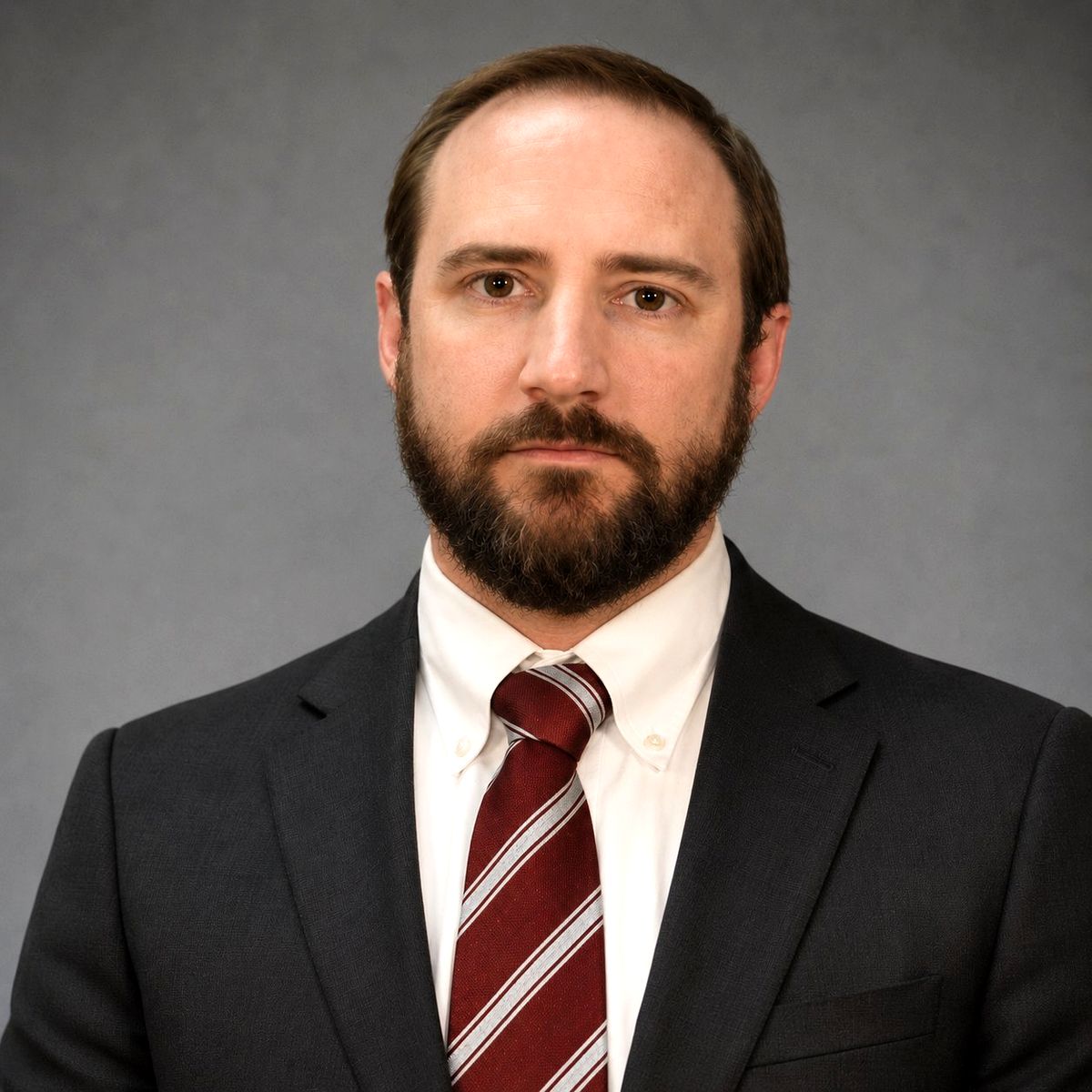
Mathews Metyko
Attorney at Law — The Metyko Law Firm PLLC | OEF Veteran | MBA | St. Mary's Law | Firsthand rodeo and rough stock experience, including bull riding